

Three in the afternoon. The sun cuts a slow diagonal across the cubicle wall. On the screen the
cursor blinks like a pulse. Seven unread emails. A phone buzzes somewhere under the desk. You take a
breath — and your shoulders stay exactly where they were, strung tight, waiting for something to
snap.
Anxiety rarely announces itself. It arrives quietly and settles across your back.
My hand went into my pocket without asking permission. My fingertips found something cool and
small. Metal. And for a moment, the room slowed down.
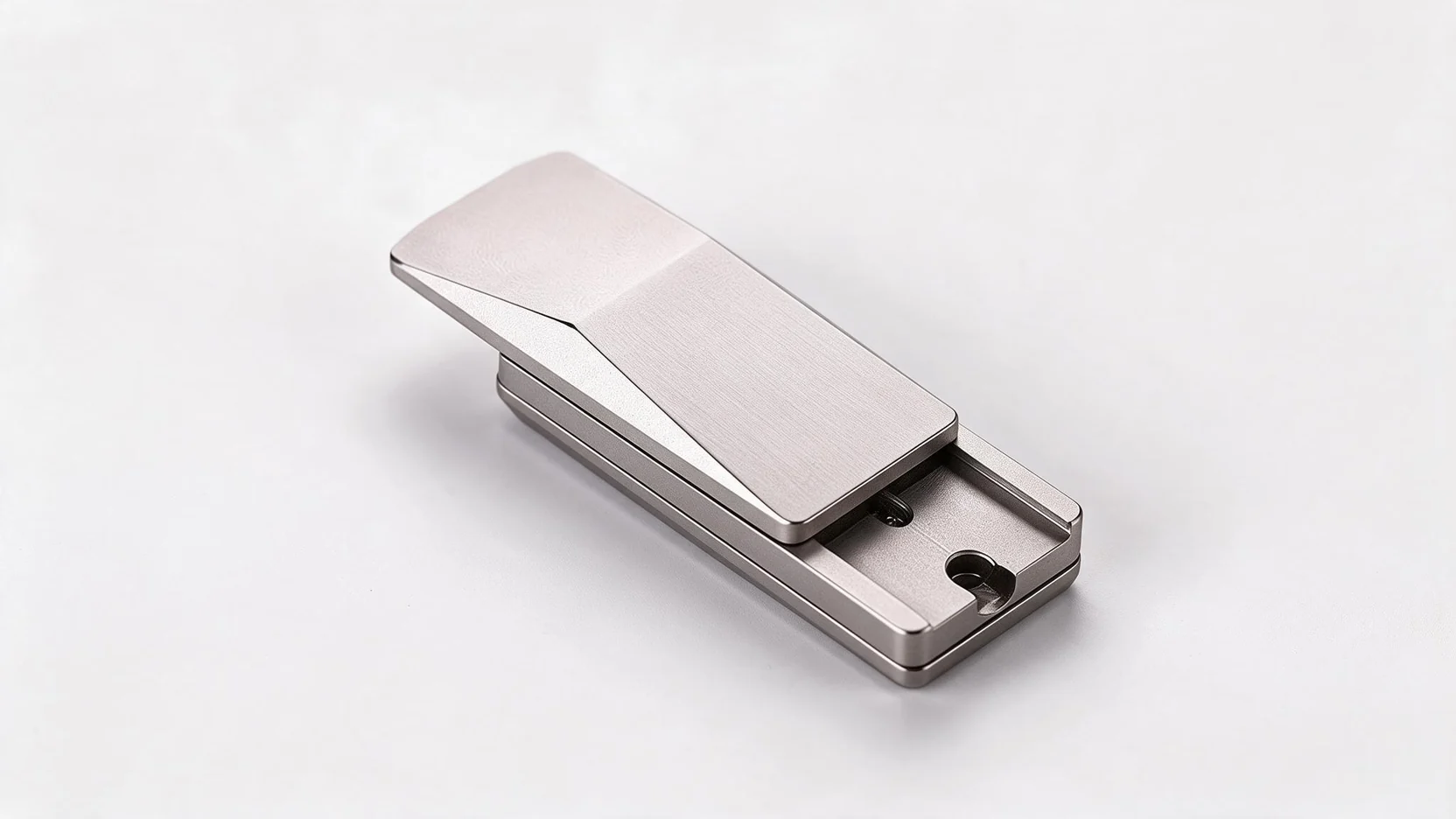
It wasn’t a pen. It was a flat slab of brushed steel with a slider set into the middle, and
my thumb found that slider the way it always does. A soft click — not loud, just clear. The cool of
the metal moved up through the pad of my thumb. My fingers found the machined ridges along the edge.
Once. Twice. My breathing fell in behind the rhythm. The to-do list that had been sprinting in
circles, the group chat I hadn’t answered, the meeting at half past three — all of it got
pulled into a smaller, quieter place.
What is actually happening at 3pm
Anxiety at a desk usually isn’t about the work itself. It’s about the gap between how much
your mind is holding and how little your hands are doing.
When you are staring at a screen, your hands are idle but your attention is not. A busy mind and an
empty pair of hands is an uncomfortable combination, and it is physical: your body looks for an outlet,
does not find one, and the tension goes into your shoulders, your jaw and your breathing.
Small, repetitive movement gives that energy somewhere to go. It is the same reason people tap a foot,
click a pen, or shred a napkin without noticing they are doing it.
Why a physical object works better than an app
A fidget app is still a screen. Opening it means the notification bar, the message preview, and the
three other apps you meant to check.
Something in your pocket asks nothing of you. There is no unlock, no badge, no feed. You reach in, your
thumb finds the same spot it found yesterday, and the loop closes in about two seconds — then you
look back up.
What makes a useful desk fidget (and what makes a distraction)
- Quiet enough for a shared room. If other people hear it, you will start monitoring
their reaction instead of your work. - One-handed. The other hand stays on the keyboard or the notebook.
- Pocket-sized. If it needs a case or a bag, it will not be there when the moment
arrives. - Made of something real. Metal has weight and temperature, so your fingers actually
register it. Hollow plastic mostly does not. - No screen, no battery, no app, no account. A fidget that needs a login is not a
fidget.
Anything that clicks loudly, needs both hands, or lights up will draw more attention than it
absorbs.
Three that fit that description
Cyber
Magnetic Slider Push Card — the one in the opening above. Brushed stainless steel with
a magnetic slider set into the body, about 7 × 3.5 cm and roughly 60 g. Thin enough to disappear
into a front pocket, heavy enough to feel like something. The magnets give the slide a defined
resist-and-release instead of a loose rattle.
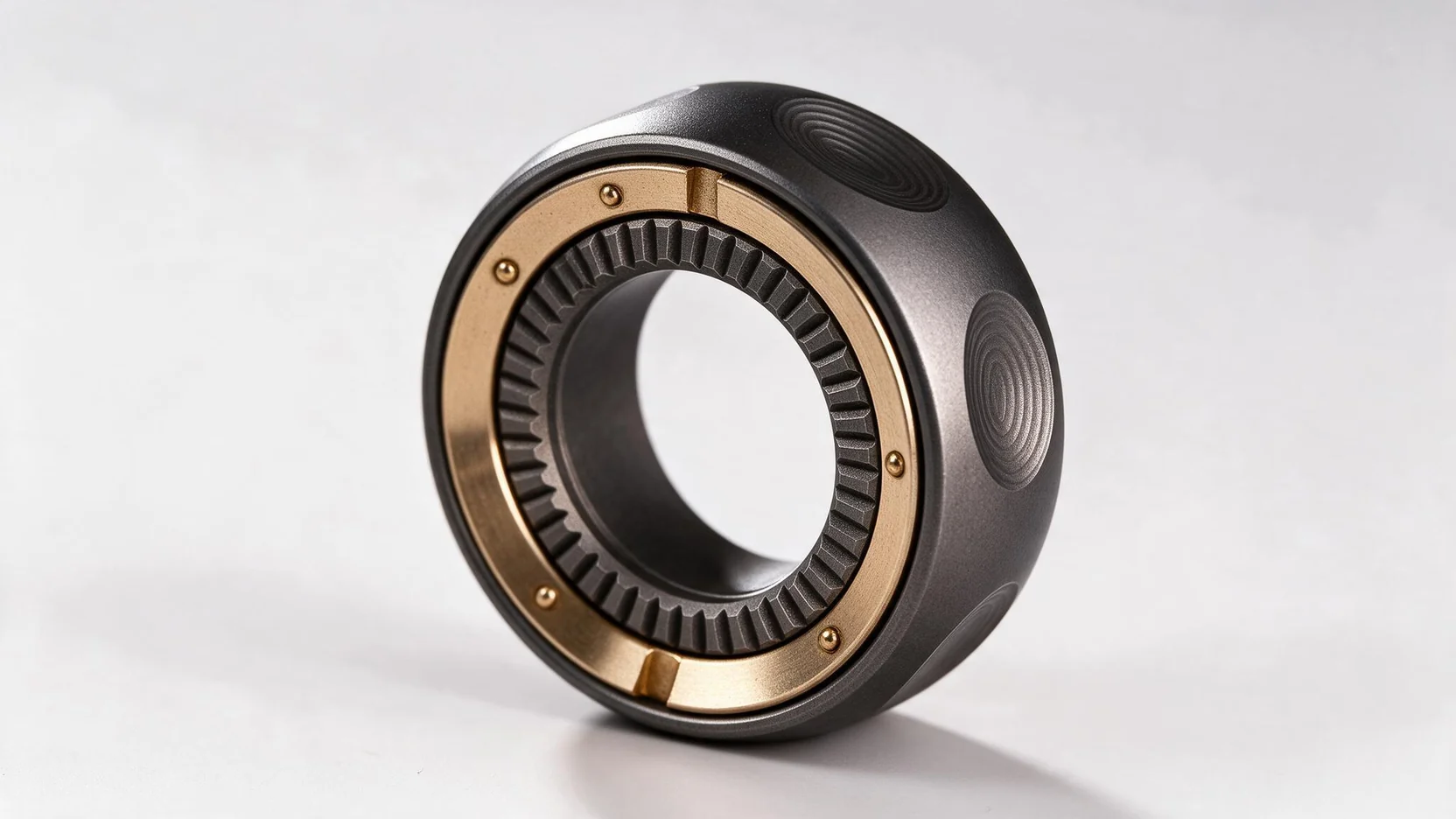
Magnetic
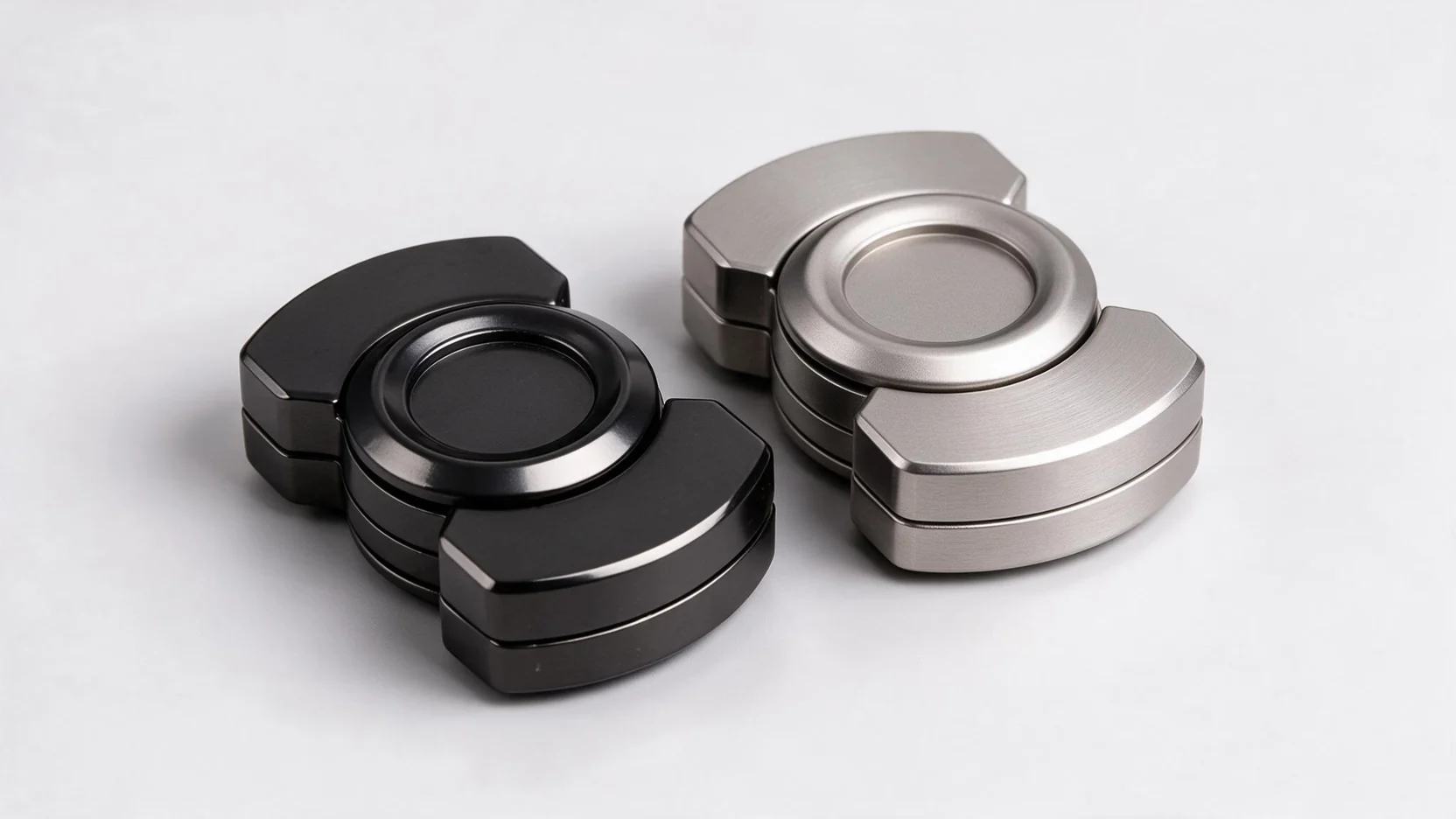
Ratchet Ring Fidget — a machined gunmetal ring with a knurled brass band that advances
in steps. This is the one for fingers that want to push against something rather than slide it. Quiet in
use: the ratchet is felt more than heard.
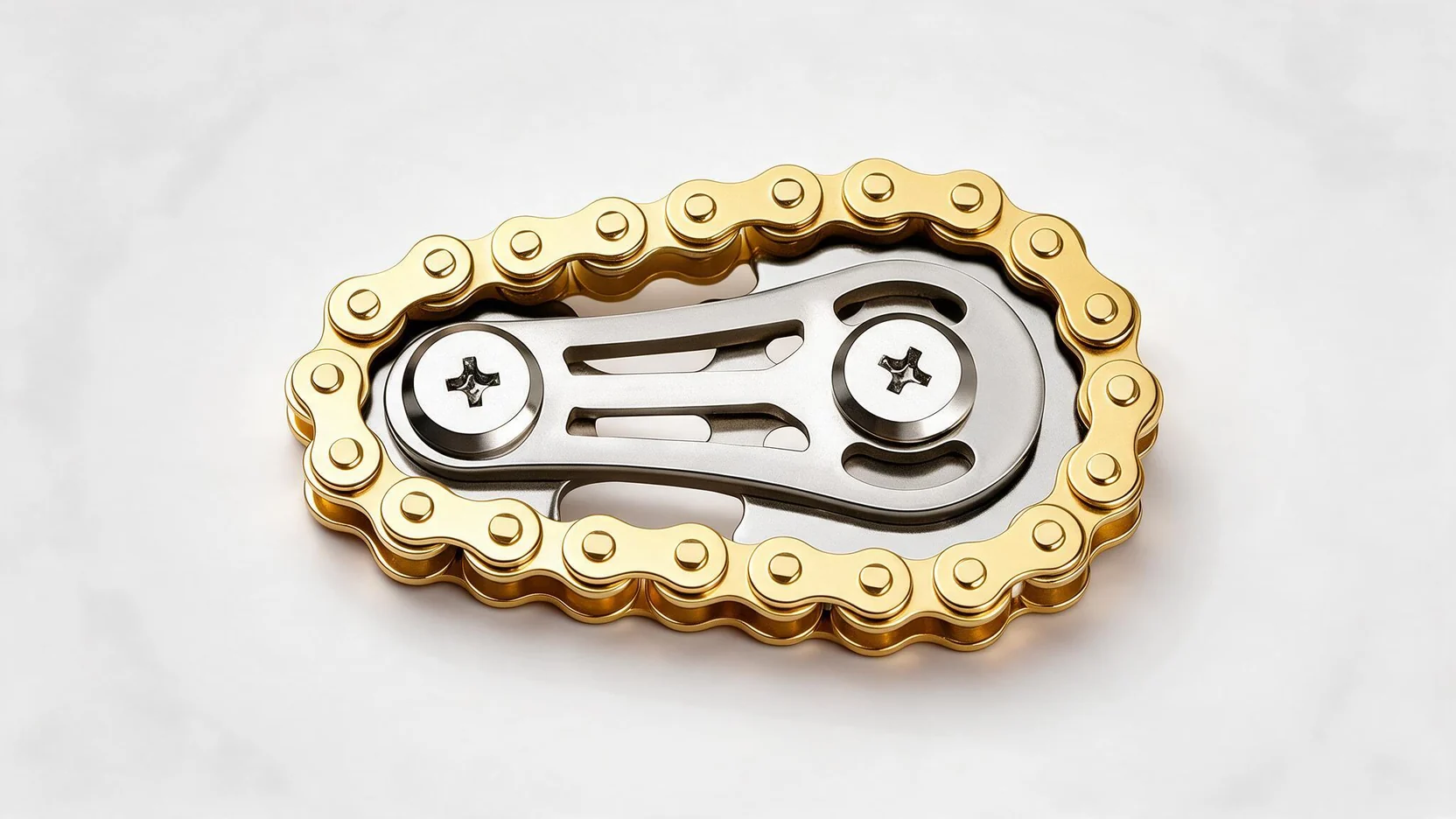
Gear Chain Fidget
Toy — seven hinged segments in polished gold with fine gear teeth along the edge. It
folds into a compact arc or opens flat across the palm. The pivots move without rattle, which is what
makes it usable in a meeting.
All three are in the EDC &
Fidget Toys collection.
How to use one without it taking over
- Keep it in the same pocket, always. The point is that your hand finds it without
thinking. A fidget you have to look for is a fidget you will not use. - Let the motion stay repetitive. Repeating one movement settles things; learning a
new trick does not. - In meetings, keep it below the desk line. Not because it is embarrassing, but
because visible movement pulls other people’s attention, and then it pulls yours. - If it becomes the thing you are doing instead of the work, put it away for an hour.
A fidget is a tool for a moment, not a hobby.
Questions we get asked
Do fidget toys actually help with anxiety?
There is no single answer that fits everyone. A fidget toy is not a treatment and we would not sell it
as one. What many people find is that giving idle hands something small and repetitive to do makes it
easier to stay in the room — particularly during long stretches at a screen.
What makes a good fidget toy for an office?
Quiet, one-handed, pocket-sized, and made of a real material. If it clicks loudly, needs two hands or
lights up, it will cost you more attention than it saves.
Is a metal fidget toy too heavy or bulky to carry?
The three above sit between roughly 45 g and 75 g, and are about the size of a small phone. Most
people stop noticing them in a pocket after a day or two.
Are fidget toys only for people with ADHD?
No. They end up in the hands of anyone who spends a long day at a desk — the reason people use
them is restlessness and focus, not a diagnosis.
Will a metal fidget toy scratch my phone or keys?
It can, with heavy contact. Keep it in its own pocket if that matters to you.
Where to find them
We keep a small, curated collection of metal EDC fidget tools — chain fidgets, ratchet rings,
slider cards and spinners — each chosen for quiet operation, real materials and pocket-friendly
size.
Everything in the collection is in stock now, with shipping included in the price.
This article is about everyday habits at a desk and is not medical advice. If anxiety is affecting
your daily life, please talk to a qualified professional.
Related reading
- Quiet Fidget Toys for Open Offices — if the problem is the noise, not the nerves.
- Gifts for People Who Fidget — if you are choosing one for somebody else.
- Sourcing from China — four steps from a photo to your door.